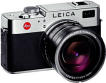
Archived posting to the Leica Users Group, 2004/10/19
[Author Prev] [Author Next] [Thread Prev] [Thread Next] [Author Index] [Topic Index] [Home] [Search]Tom Abrahamsson kindly lent me his loaner R-D1, along with a 50mm
Summilux ASPH for a few days, and I have been trying things out, and
trying to see how it compares with the Canon D60, and the new 20D. No
point in asking how it compares with the Nikon D70, Olympus E-1 etc
because I don't have access to those.
First, I have to note that the rangefinder was off, both horizontally
and vertically, so my notes on rangefinder accuracy have to be
limited. However, it seemed to be generally consistent in the amount
that it was off, which is of course to be expected. The sole anomaly
was the Noctilux. It was downright weird. At 1m it was off by about
3cm; the same as the other lenses. At 2.2m, it was off by 15 to 20cm,
or 2 times as much as the other lenses. I haven't any idea at this
time what could be the reason for this. I've tried it a number of
times, and the results are the same.
The error in the rangefinder, BTW, is of the type that if you focus
on a certain item, the item behind it is actually in focus. The
Noctilux error exacerbated that, so that the focus was way behind the
item focussed on.
My 90AA would not engage the focus roller properly, so I only tested
it at infinity. The 75 1.4 and the 135 Tele-Elmar were fine. The 35mm
Summilux ASPH and 35 4-gen Summicron, 50 Nokton and 50 Elmar were
very good, with the 35's being particularly good in delivering
satisfying results on a consistent basis. These are the lenses best
suited to this camera, but unfortunately I prefer the angle of view
they give on a 35mm neg, not the effective 52mm view that they
provide on this camera.
I tried a number of wideangle lenses on the camera, including 12mm
VC, 15mm VC, 21mm VC, 21mm ASPH and 17mm Pentax fisheye. The fisheye
lens, understandably, showed no vignetting. All the others did, to
one degree or another. The 15 and 21 VC were so bad that I would not
consider them useable. The 12 wasn't bad and correctable, and the 21
ASPH was quite useable as is. From the results I wouldn't even bother
to try my Hologon, even if I could mount it (I can't, because of the
rear element intrusion). The vignetting would be terrible.
I posted some photos I took with the wideangle lenses, and some shots
of a blank wall at:
http://www.archiphoto.com/Various/RD1vignette/index.htm
The photos are underexposed somewhat, and this would slightly
increase the apparent vignetting, but these photos are directly out
of the camera eexcept for resizing. The last photo shows one of my
cameras with the center filter I ususally use for film with the 12mm
lens (which gives excellent results), and the 30mm Hasselblad Xpan
filter, which I used for this experiment to see if the smaller spot
on that filter could help in evening out the vignetting. It did, but
the photo is somewhat uneven due to my holding the filter in front of
the lens with my fingers.
It's clear that the lens design has a lot of influence on the
vignetting with the digital sensor, and it shows that all the early
arguments about why a digital M, especially full sensor, is not
really doable. The two 21's don't show a lot of variance in
vignetting on film, yet the difference is amazing on the R-D1
Other points:
Battery is small and of low capacity; buy extra batteries!
The door on the battery compartment is fiddlier than most, and makes
it harder than necessary to get the battery in and out.
The dials are cute, but should be gotten rid of, IMO.
Exposure compensation on same dial as shutter speeds is a poor idea.
This works if you rarely use manual, or rarely use auto. Switching
back and forth is harder. Somewhat awkward to get at release button.
Viewfinder would have been better if it had a lower magnification so
that 21 and 24(25) mm lenses could be used without accessory finders.
1:1 is nice, but it comes at the expense of other, IMO, more
important concerns. 28mm frames impossible to see with glasses, and
very hard without.
Best lens for this camera is a 35mm, or the Tri-Elmar, but you have
to remember to change viewfinder frames each time you change focal
length.
Solid feel, except for lever to change white balance and quality,
frame selector and flippable LCD screen.
Menus ridiculous. Ok if you never change mode. Magnifying and
scrolling very complicated. To format a card, you have to press a
button 7 times and twiddle the 'rewind' knob 3 times. On the Canons,
you press a button 3 times, and twiddle a dial twice. This is typical.
Noise seems fairly low; almost as low as the 20D, which is very good.
The noise in the R-D1 is 'grittier', and looks almost like grain in
B&W.
Auto white balance jumps around a lot, especially in mid to lower
level lighting. Best set it on one of the presets, which have tiny,
arcane (definitely non-standard) symbols on the dial display.
When the white balance is correct, the picture quality can be quite
high; I would say very slightly higher than the D60 due to the better
noise control, but not as high as the 20D. Both Canons, and
especially the 20D, have better white balance performance.
Exposure does not hold if you partly depress shutter button; need to
use button on back, but you have to hold it. Locking in an exposure
not possible. As the button is just underneath the wind lever, it's
quite cumbersome.
B&W modes are nice, and include a set of 'filters'. This way you get
to shoot with 1600ISO with a 'red filter' with no filter factor loss.
If you shoot a lot of B&W pictures, and don't want to do much post
processing, this can be very handy.
Picture parameters are customizable, and allow 'edge enhancement'
(usm sharpening), contrast, saturation, tint and noise reduction
personalization. The standard (mid-point) settings are quite good,
but if you want straight-out-of-the-camera files for printing, you
might want to tweak them somewhat, especially the sharpening.
In summary, the camera largely does what it sets out to do, and does
it well enough to be desirable for people with Leica or CV lenses,
but there are a number of shortcomings which should be considered. If
you want a field of view equivalent to a 32mm lens, you need the
Leica 21. The non-ASPH might work, but the ASPH certainly does. The
CV 15 and 21 lenses should not be considered except as emergency
measures, and the 12 is problematic. These shortcomings are a big
blow in a $2800 camera, and Leica better get them solved before
coming out with an even more expensive, lower crop factor Digital M.
So the camera is only really useable with 35 and 50mm lenses; for
others you have to use accessory finders, and with the wider lenses
you might experience severe vignetting. In conjunction with the
operational oddities and price, this makes the camera uninteresting
to me. Maybe the R2-D2 will work better, and have a more competitive
price.
The 50 Noctilux issue is puzzling, and will need more investigation
with a properly calibrated camera.
--
* Henning J. Wulff
/|\ Wulff Photography & Design
/###\ mailto:henningw@archiphoto.com
|[ ]| http://www.archiphoto.com